Grease Interceptor Cleaning in Irvine, CA
An interceptor undersized for your kitchen's actual volume hits its pumping threshold early no matter how often you service it. We pump, document, and verify your unit is sized for what you're running through it.
Baffle Chambers, Retention Time, and the 25% Threshold
Physically, a grease interceptor bears little resemblance to a grease trap despite serving the same basic function. Interceptors are large precast concrete or fiberglass tanks, typically 500 to several thousand gallons, installed underground or in an outdoor enclosure, with multiple baffle chambers that give grease and solids a longer retention time to separate from the water passing through. A grease trap, by comparison, is a small steel or plastic box, often 20 to 50 gallons, sitting indoors under or near a single sink. Servicing an interceptor requires a vacuum pump truck; a trap can be serviced by hand in minutes. That difference in scale is why interceptors are the code-required unit for high-volume kitchens where a point-of-use trap simply can't keep pace with the wastewater volume, and why Irvine drain cleaning experts treat the two as entirely different service categories.
Local sanitation district rules require pumping once accumulated grease and solids reach 25% of the unit's liquid depth, a measurable, code-referenced threshold rather than a subjective judgment call. Most Irvine interceptors reach that point every 60 to 90 days, though high-volume operations like large restaurants and food halls often need monthly service. We track a facility's accumulation rate over a few service cycles and set a fixed schedule from that data, rather than guessing at an interval and hoping it holds. Every pump-out also generates a signed, licensed waste-hauling manifest showing volume removed, disposal location, and service date, documentation that needs to be ready the moment a health department or sanitation district audit asks for it.
Sizing follows Uniform Plumbing Code tables based on a kitchen's flow rate, meal counts, and number of connected fixtures, prep sinks, dishwashers, and floor drains among them. A unit sized correctly when a kitchen opened can become undersized as meal volume grows or additional fixtures get added, and an undersized interceptor reaches its 25% threshold quickly, forcing more frequent pump-outs than the budget accounts for while becoming more prone to grease carryover into the sewer lateral, a direct path to sanitation district violations and backups.
Pump-Out and Documentation Procedure
Accumulation Assessment
We check the current grease and solids level against the 25% liquid-depth threshold that triggers a required pump-out.
Pump-Out
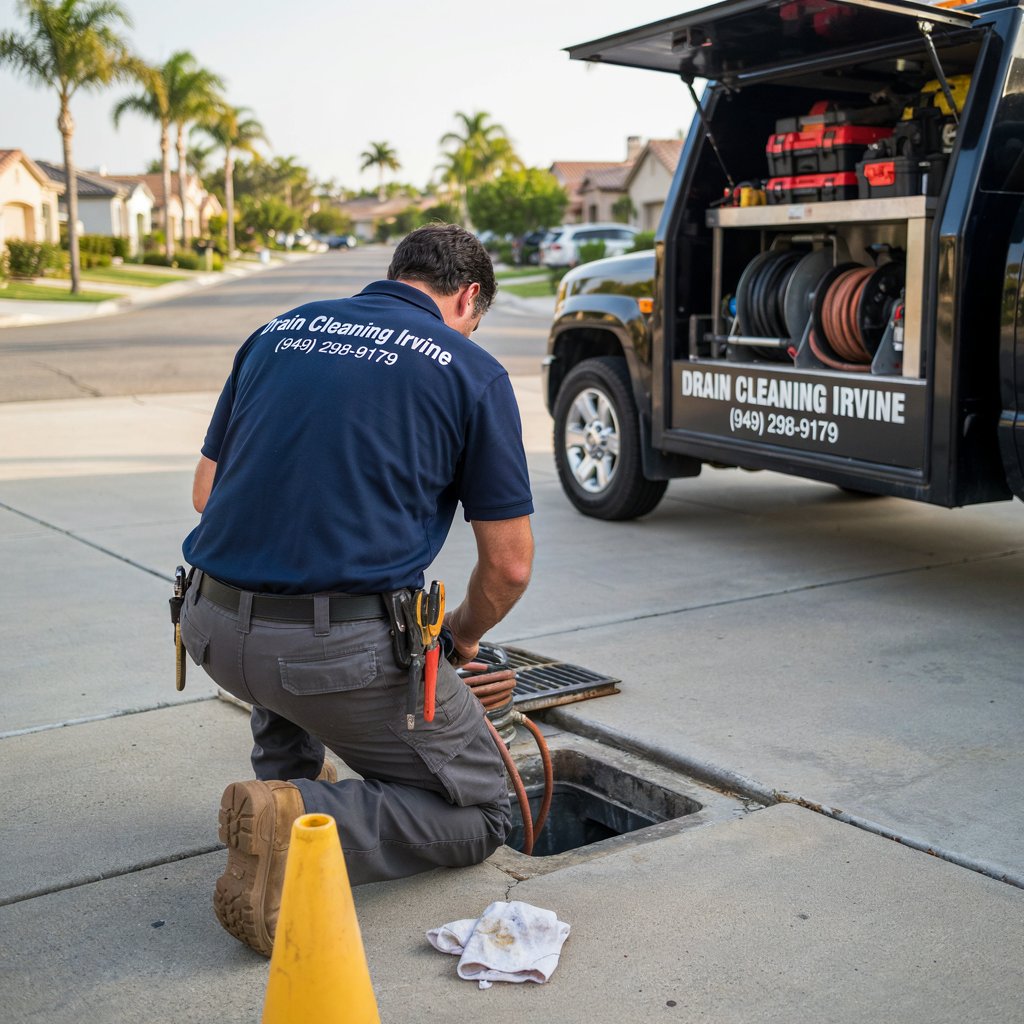
A vacuum pump truck removes grease and solids from the tank and each baffle chamber, restoring full retention capacity.
Manifest Documentation
You receive a signed waste-hauling manifest showing volume removed, disposal location, and service date, ready for an audit.
Sizing and Schedule Review
We confirm the unit is still sized correctly for your current kitchen volume and set or adjust a fixed pumping schedule.
Grease Interceptor Service Rates
| Service | Typical Cost | Notes |
|---|---|---|
| Standard Pump-Out (mid-size underground) | $395 – $875 / visit | Recurring scheduled service priced lower per visit |
| Large-Capacity or Emergency Same-Day Service | Quoted individually | Depends on tank size and accessibility |
| Waste Manifest Documentation | Included | Provided with every pump-out |
Indicators Worth a Service Review
- Pumping frequency climbing despite steady kitchen volume: That pattern often points to an undersized unit rather than a change in how the kitchen operates.
- No documented service within 60 to 90 days: That's the typical interval before most Irvine interceptors reach the 25% accumulation threshold.
- Grease odor or slow drainage near kitchen floor drains: These often indicate the interceptor is already past capacity and allowing carryover into the connected line.
- Increased meal volume or added fixtures since installation: Growth that outpaces the unit's original sizing is worth confirming against Uniform Plumbing Code capacity tables.
Is Your Interceptor Actually Sized Right?
Interceptor sizing isn't a one-time decision made at installation and forgotten. Uniform Plumbing Code tables size a unit against a kitchen's flow rate, meal counts, and number of connected fixtures, prep sinks, dishwashers, and floor drains, at the time it's specified. A kitchen that's grown its meal volume, added a second prep line, or connected new fixtures since then may be running well beyond what its interceptor was ever sized to handle, and the unit doesn't announce that fact directly. What it does instead is reach its 25% accumulation threshold faster and faster, quietly increasing pump-out frequency until a facility manager notices the invoices climbing without an obvious cause. An undersized unit is also more prone to grease carryover into the sewer lateral between services, which is how a sizing problem becomes a sanitation district violation rather than staying a scheduling inconvenience. If your pumping frequency has crept up even though kitchen volume has stayed flat, that's the specific pattern worth a sizing check against your current unit's rated capacity.
Manifest Documentation on Every Visit
Every pump-out includes signed, licensed waste-hauling manifest documentation showing volume removed, disposal location, and service date, ready to hand over for a health department or sanitation district audit. We keep a copy on file so your service history is retrievable at any time, not just after the current invoice.
Most standard underground pump-outs take 45 to 90 minutes depending on tank size and truck access, and we schedule around your slower operating hours or early morning windows so the crew is off site before service ramps up. Larger or harder-to-access units get a realistic time estimate up front rather than an open-ended appointment window.
Background-checked technicians, upfront pricing before work begins, and 18 years serving Irvine's high-volume commercial kitchens back every visit. Every interceptor pump-out and cleaning is backed by our Guaranteed Workmanship, and we stand behind the accuracy of our manifest documentation for your compliance records just as firmly.
Interceptor Sizing and Service: Common Questions
What's the difference between an interceptor and a grease trap?
A grease trap is a small point-of-use unit, often 20 to 50 gallons, installed under or near a single sink to serve a small kitchen. A grease interceptor is a much larger unit, typically 500 to several thousand gallons, installed underground or outdoors and plumbed to serve an entire high-volume kitchen's wastewater line. Interceptors require pump-truck service, not a hand-scoop, and are the code-required unit for larger operations.
How often does a grease interceptor need pumping?
Most Irvine interceptors need pumping every 60 to 90 days, though high-volume operations like large restaurants and food halls often need monthly service. Local sanitation district rules require pumping once accumulated grease and solids reach 25% of the unit's liquid depth. We track your facility's accumulation rate over a few cycles and set a fixed schedule so you're never guessing.
How much does grease interceptor cleaning cost?
Standard pumping on a mid-size underground interceptor typically runs $395 to $875 per visit, with recurring scheduled service priced lower per visit than one-off calls. Large-capacity units and emergency same-day service run higher. Final pricing depends on tank size, accessibility, and how much grease and solids have accumulated since the last pump-out.
Do you provide waste manifests?
Yes. Every pump-out includes signed, licensed waste-hauling manifest documentation showing volume removed, disposal location, and service date, ready to hand over for a health department or sanitation district audit. We keep a copy on file so you can pull your service history at any time.
How is an interceptor different from a grease trap physically?
Physically, interceptors are large precast concrete or fiberglass tanks installed underground or in an outdoor enclosure, with multiple baffle chambers that give grease and solids a longer retention time to separate from the water. Grease traps are small steel or plastic boxes that sit indoors under or near a sink. Servicing an interceptor requires a vacuum pump truck; a trap can be serviced by hand in minutes.
What size interceptor does our facility need?
Sizing follows Uniform Plumbing Code tables based on your kitchen's flow rate, meal counts, and number of connected fixtures such as prep sinks, dishwashers, and floor drains. Higher meal volumes and more fixtures require a larger unit. We assess your kitchen's actual service volume and cross-check it against your current unit's rated capacity to confirm it's still sized correctly as your business has grown.
Can an undersized interceptor cause ongoing problems?
Yes. An undersized unit reaches the 25% accumulation threshold quickly, forcing more frequent pump-outs than your budget accounts for, and it's more prone to grease carryover into the sewer lateral, which can trigger sanitation district violations and backups. If your pumping frequency keeps climbing even with steady kitchen volume, we check whether the unit itself is undersized for your operation.
How long does pumping take?
Most standard underground interceptor pump-outs take 45 to 90 minutes depending on tank size and truck access. We schedule around your slower operating hours or early morning windows so the crew is off site before service ramps up, and larger or harder-to-access units are quoted with a realistic time estimate up front.
Is this covered by a guarantee?
Yes. Every interceptor pump-out and cleaning is backed by our Guaranteed Workmanship. If an issue traces back to how the service was performed, we return and correct it at no charge. We also stand behind the accuracy of our manifest documentation for your compliance records.
What Customers Say About Our Grease Interceptor Service
"Reliable commercial service for our restaurant's large grease interceptor."
"Thorough cleaning and proper disposal documentation every single time."
"Professional team that works around our kitchen schedule."
Get a Fixed Schedule and a Sizing Check
We'll pull an accumulation reading, confirm your unit is still sized for your current volume, and set a schedule backed by manifest documentation. Flexible scheduling keeps kitchen operations uninterrupted.
Every Drain, Sewer, and Pipe Service We Offer
Residential
- ✓ Clogged Drain Clearing
- ✓ Drain Snaking
- ✓ Hydro Jetting
- ✓ Video Camera Drain Inspection
- ✓ Root Removal
- ✓ Sewer Line Cleaning
- ✓ Bathroom Drain Cleaning
- ✓ Kitchen Drain Cleaning
- ✓ Toilet Drain Cleaning
- ✓ Laundry Drain Cleaning
- ✓ Basement Drain Cleaning
- ✓ Roof Drain Cleaning
- ✓ Downspout Drain Cleaning
- ✓ Preventative Drain Maintenance
- ✓ Emergency Drain Cleaning
- ✓ Drain Odor Diagnosis and Removal
- ✓ Slow Drain Diagnosis and Repair
- ✓ Vent Stack Cleaning
- ✓ Water Leak Detection
- ✓ Floor Drain Cleaning
Commercial
Grease Interceptor Service Across Irvine, CA
We're based at 4492 Walnut Ave, Irvine, CA, with pump trucks regularly servicing restaurants, food halls, and institutional kitchens throughout Irvine and the surrounding Orange County area.