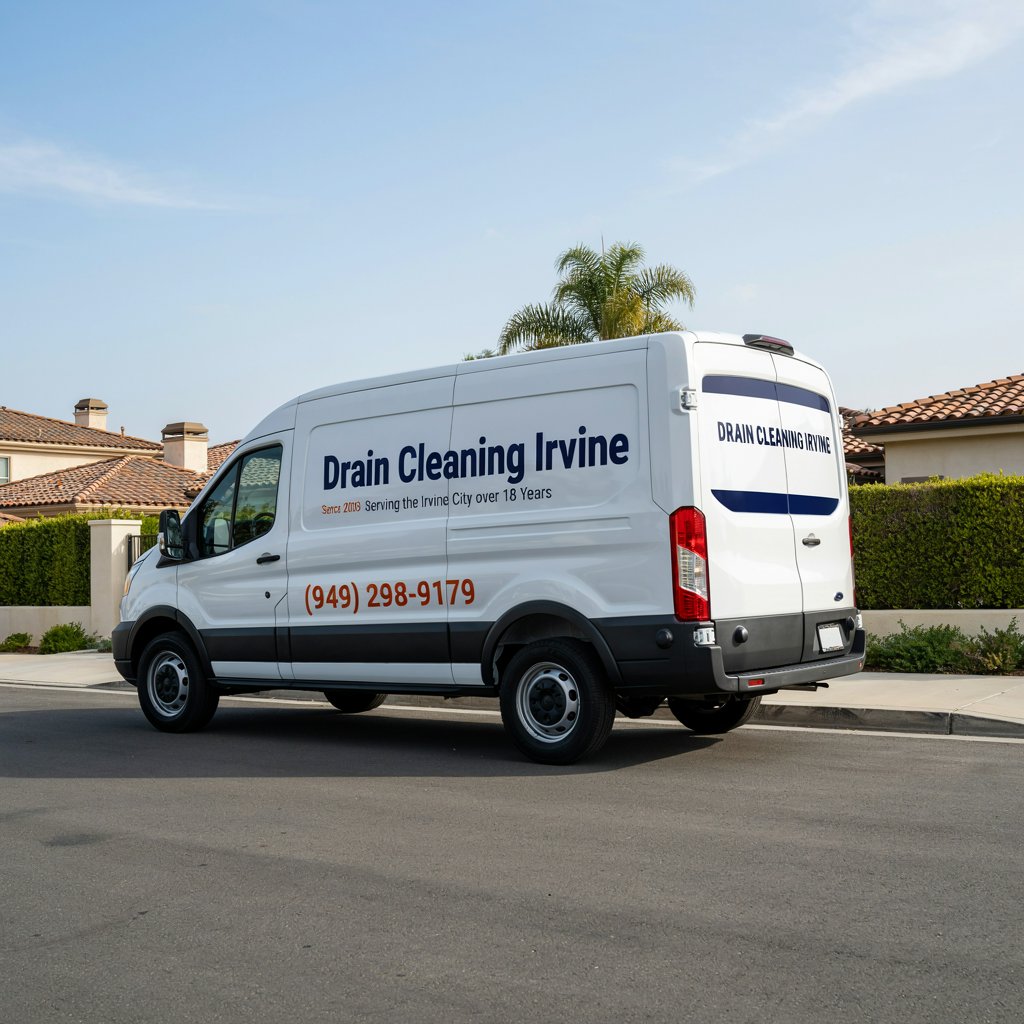
Industrial Drain Cleaning in Irvine, CA
Industrial lines run 6 to 24 inches in diameter carrying solids loads a standard commercial jetter isn't rated for. We bring truck-mounted equipment matched to that scale, and crews trained on lockout/tagout and confined-space protocols.
Scale Changes the Equipment and the Protocol
Standard commercial service typically addresses 2 to 4 inch fixture and branch lines in retail, office, or restaurant settings with light-duty cable machines. Industrial facilities run 6 to 24 inch process and sanitary mains carrying higher solids loads, oils, and in some cases regulated waste streams, a scale that requires truck-mounted hydro-jetting rated for 3,000 to 4,000 PSI at high GPM flow, root-cutting attachments, and crews trained on lockout/tagout and confined-space protocols around production equipment. A cable machine sized for a restaurant's branch line does nothing against a 12-inch process main carrying industrial solids, which is why Orange County's industrial drain specialists scale the equipment and the crew certification requirements together rather than separately.
Work inside an active manufacturing or processing facility also operates under a different compliance framework than a standard commercial call. We work within a facility's existing waste management and environmental compliance protocols, including proper containment and disposal documentation when a line carries process chemicals, industrial wastewater, or other regulated effluent. Coordinating with a facility's EHS or operations team ahead of time on permit-specific waste handling requirements isn't an optional courtesy here, it's a precondition for doing the work correctly and keeping the facility's own compliance record intact.
Recurring blockages in industrial lines are usually driven by one of a small set of causes: grease and oil solidification, fibrous or particulate solids settling in low-flow sections, scale buildup in older cast iron or clay lines, or piping that's undersized or improperly sloped relative to current production volume. Irvine's manufacturing and processing facilities, concentrated in business parks like the Irvine Business Complex and the industrial areas surrounding the Great Park, span a wide range of building ages and process types, and a camera inspection is what identifies which of these causes is actually occurring so the fix addresses the root problem instead of the recurring symptom.
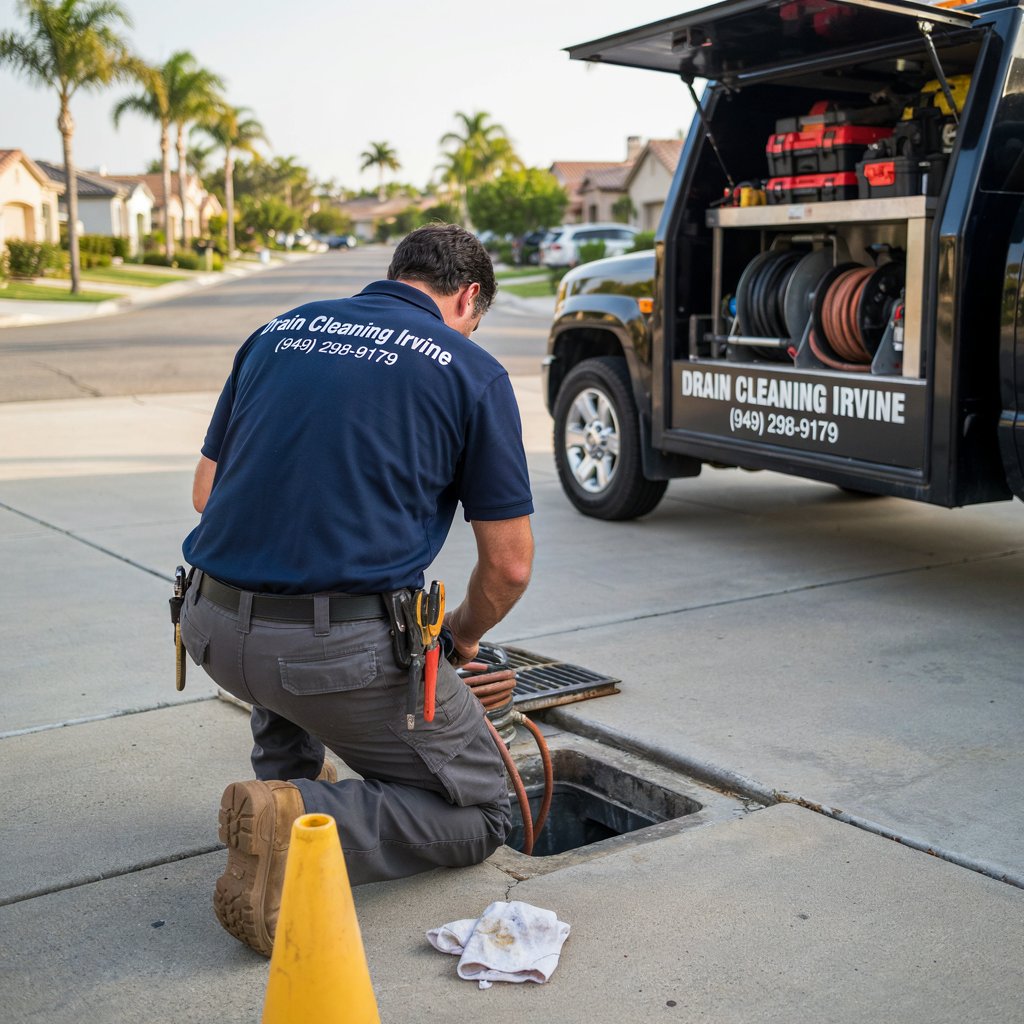
Industrial Service Protocol
Facility Safety Coordination
We coordinate lockout/tagout and confined-space protocols with your EHS or operations team before any equipment is deployed near production areas.
Camera Diagnosis
A camera inspection identifies the actual cause, grease and oil solidification, particulate solids, scale, or undersized piping, before we recommend a clearing method.
Truck-Mounted Hydro-Jetting and Cable Clearing
Equipment rated to the line's diameter and material, from 3,000 to 4,000 PSI jetting to heavy-duty sectional cable, clears the identified blockage.
Documentation and Compliance Record
You receive camera footage or stills, a written summary of findings, and a service record for your facility's maintenance and compliance files.
How Industrial Service Is Priced
| Service | Cost Basis | Notes |
|---|---|---|
| Standard Line Clearing | Scales with diameter, access, and waste characteristics | No flat per-visit rate; larger lines require more time and specialized equipment |
| Camera Inspection | Included in diagnostic scope | Confirms the cause before recommending a clearing method |
| Scheduled Maintenance Contract | Lower cost per visit than reactive service | Monthly, quarterly, or semi-annual intervals available |
Indicators Worth a Diagnostic Visit
- Recurring blockages in the same line section: A line that clears and reblocks despite periodic service usually has an underlying cause, undersized piping or scale buildup, that a camera inspection can confirm.
- Slower drainage during peak production hours: Flow that degrades specifically under higher volume points to a line running near or past its effective capacity.
- No camera inspection within your maintenance interval: A facility without a recent diagnostic record can't confirm whether a recurring issue has an identified cause.
- Line diameter unreassessed since a production increase: Piping sized for an earlier throughput level may no longer match current volume.
Why a Light-Duty Cable Machine Isn't the Answer
A standard commercial cable machine is built for 2 to 4 inch fixture and branch lines, and asking it to clear a 12 or 16 inch process main is a mismatch that produces no meaningful result regardless of how long the operator runs it. Truck-mounted hydro-jetting rated for 3,000 to 4,000 PSI at 18 to 20 GPM is a different category of equipment entirely, generating the volume and pressure needed to move solids and scale through a line of that diameter rather than just agitating the surface. The distinction matters for facilities managers evaluating a vendor: a company quoting industrial work with standard commercial equipment either doesn't understand the scale mismatch or is planning to undersell the job and discover the problem mid-service, neither of which is a good position to be in with a production line offline. We size the equipment, jetting units, sectional cable machines, root-cutting and descaling attachments, and self-leveling push or crawler cameras, to the specific line diameter and material on file before a crew arrives, not after the first attempt fails.
Trained for Production Environments
Our crews are trained on lockout/tagout and confined-space protocols specific to working around active production equipment, not general safety awareness applied to an unfamiliar setting. We schedule around production shifts and can isolate the affected line section so work proceeds without a full facility shutdown wherever the layout allows it.
For lines carrying process chemicals, industrial wastewater, or other regulated effluent, we work within your facility's existing waste management and environmental compliance protocols, including proper containment and disposal documentation, and coordinate directly with your EHS team on permit-specific requirements ahead of time.
Background-checked technicians, equipment rated from 2 to 24 inches in diameter, and 18 years serving Irvine's manufacturing and processing facilities back every job. Industrial drain cleaning work is backed by our standard Guaranteed Workmanship, if a line we've serviced blocks again from the same cause within the guarantee period, we return to address it at no additional charge.
Industrial Service: Common Questions
What makes industrial drain cleaning different from standard commercial service?
Standard commercial service typically addresses 2 to 4 inch fixture and branch lines in retail, office, or restaurant settings with light-duty cable machines. Industrial facilities run 6 to 24 inch process and sanitary mains carrying higher solids loads, oils, and in some cases regulated waste streams, which requires truck-mounted hydro-jetting rated for 3,000 to 4,000 PSI at high GPM flow, root-cutting attachments, and crews trained on lockout/tagout and confined-space protocols around production equipment.
What size lines can you service?
Our jetting units and cable equipment are rated to service lines from 2 inches up to 24 inches in diameter, covering everything from process floor drains to primary sanitary and storm mains beneath a facility. For lines larger than 24 inches or vault and manhole access points, we bring specialized nozzles and camera equipment sized to the pipe material and diameter on file.
How much does industrial drain cleaning cost in Irvine?
Costs scale with line diameter, access difficulty, and waste characteristics rather than a flat per-visit rate, see our pricing table for typical ranges on standard line clearing, camera inspection, and scheduled maintenance visits. Facilities on a maintenance contract typically see lower per-visit costs than one-off emergency calls.
Do you handle facilities with hazardous or regulated waste streams?
Yes. We work within a facility's existing waste management and environmental compliance protocols, including proper containment and disposal documentation when a line carries process chemicals, industrial wastewater, or other regulated effluent. We coordinate with your EHS or facilities team ahead of time on any waste handling requirements specific to your permit.
Can you work during production hours without shutting us down?
In most cases, yes. We schedule around production shifts and can isolate the affected line section so work proceeds without a full facility shutdown. For lines that intersect active process areas, we coordinate directly with your operations team to sequence the work during a planned window or low-throughput period.
What causes recurring blockages in industrial lines?
Recurring blockages are usually driven by grease and oil solidification, fibrous or particulate solids settling in low-flow sections, scale buildup in older cast iron or clay lines, and undersized or improperly sloped piping relative to current production volume. A camera inspection identifies which of these is occurring so the fix addresses the cause, not just the symptom.
Can you set up a preventative maintenance contract for our facility?
Yes, we set up scheduled preventative maintenance contracts on a monthly, quarterly, or semi-annual interval based on your facility's waste volume and line history. A maintenance contract typically costs less per visit than reactive service and reduces the risk of unplanned downtime from an emergency blockage.
What equipment do you use for industrial-scale lines?
We use truck-mounted hydro-jetting units capable of 3,000 to 4,000 PSI at up to 18 to 20 GPM for large-diameter lines, along with heavy-duty sectional cable machines, root-cutting and descaling attachments, and self-leveling push and crawler cameras for inspection and verification on lines up to 24 inches.
Do you provide documentation for our facility's maintenance records?
Yes, every industrial service visit includes a documentation package with camera inspection footage or stills, a written summary of findings, and a service record you can file for your facility's maintenance and compliance records. This is available on request for audits or insurance purposes.
Is industrial drain cleaning covered by a guarantee?
Yes, industrial drain cleaning work is backed by our standard Guaranteed Workmanship, if a line we've serviced blocks again from the same cause within the guarantee period, we return to address it at no additional charge.
What Customers Say About Our Industrial Service
"Handled our warehouse drain maintenance with zero downtime for our operations."
"Equipped to handle high-capacity industrial drainage systems effortlessly."
"Professional crew, strict adherence to safety standards, and fantastic results."
Get a Crew Trained for Your Facility's Requirements
We coordinate lockout/tagout, confined-space protocols, and EHS requirements before equipment arrives on site. Flexible scheduling works around production shifts.
Every Drain, Sewer, and Pipe Service We Offer
Residential
- ✓ Clogged Drain Clearing
- ✓ Drain Snaking
- ✓ Hydro Jetting
- ✓ Video Camera Drain Inspection
- ✓ Root Removal
- ✓ Sewer Line Cleaning
- ✓ Bathroom Drain Cleaning
- ✓ Kitchen Drain Cleaning
- ✓ Toilet Drain Cleaning
- ✓ Laundry Drain Cleaning
- ✓ Basement Drain Cleaning
- ✓ Roof Drain Cleaning
- ✓ Downspout Drain Cleaning
- ✓ Preventative Drain Maintenance
- ✓ Emergency Drain Cleaning
- ✓ Drain Odor Diagnosis and Removal
- ✓ Slow Drain Diagnosis and Repair
- ✓ Vent Stack Cleaning
- ✓ Water Leak Detection
- ✓ Floor Drain Cleaning
Commercial
Industrial Drain Service Across Irvine, CA
We're based at 4492 Walnut Ave, Irvine, CA, servicing manufacturing, processing, and warehouse facilities throughout Irvine and the surrounding Orange County industrial corridors.